Digital product development for founders and businesses in Africa

Don’t just build a product. Build the right one

We help founders and businesses turn an idea, a customer problem or an existing product into something people choose to use: discovered, designed, built, launched and improved with you.

Rather chat first? Message us on WhatsApp

  • Start with discovery, not a quote for features
  • You own the product and the code
  • We build and run our own products
Illustration: a problem, shaped into a wireframe, then into a product

The most expensive mistake is building the wrong thing

Most products that struggle weren’t built badly. They were built before anyone was sure what they should be.

  • Too many features

    Months spent on everything at once, while the one thing users needed waits.

  • No clear user

    A product for “everyone” that nobody feels was built for them.

  • A vague problem

    If the problem can’t be said in a sentence, the product can’t solve it well.

  • An experience people abandon

    Confusing first steps lose people who were ready to try it.

  • No validation

    Building first, then finding out whether anyone wants it.

  • Technology chosen too early

    Decisions made before the product is understood, then expensive to undo.

  • No clear first release

    Without an agreed MVP, the launch date keeps moving.

  • Nothing measured after launch

    No way to know what is working, so the next decision is a guess.

Product thinking doesn’t slow you down. It stops you building what you’ll later throw away

Good products start with problems, not features

Before we talk about screens or technology, we want to understand what the product is for.

We understand

  • The userWho they are, and what their day looks like
  • The problemWhat gets in their way, and how often
  • The contextWhere, when and on what device they meet it
  • The alternativesWhat they do today instead, and why it falls short
  • The outcomeWhat “solved” looks like for them
  • The business modelHow the product creates value for you
  • The assumptionsWhat must be true for any of this to work

Then we decide

  • What to buildThe few things the product must do well
  • What not to buildIdeas that wait until users show they matter
  • What to test firstThe riskiest assumption, checked as cheaply as possible

From idea to a product that keeps getting better

Launch is a step in the middle, not the end. What real users do after launch shapes what comes next.

  1. Idea

    A problem or opportunity

  2. Discovery

    Users, problem and assumptions

  3. Strategy

    What the product must accomplish

  4. Design

    How people will experience it

  5. MVP

    The smallest useful version

  6. Build

    In increments you review

  7. Launch

    Into real hands, measured

  8. Learn

    Usage, feedback and friction

  9. Improve

    The next release, based on evidence

Then back to learning, with each release

Product discovery, sized to your product

Discovery turns an idea into a clear brief. Not every product needs every activity: a founder with an idea and a business adding a digital service need different things. We choose what answers your open questions.

  • Stakeholder interviews
  • Conversations with likely users
  • Problem definition
  • User personas, where useful
  • User journeys
  • Competitor and alternative research
  • Market assumptions
  • Feature discovery
  • Business model questions
  • Technical feasibility
  • Product requirements
  • MVP definition

Discovery usually takes two to four weeks, and you keep everything it produces, whether or not we build the product.

A product direction everyone can agree on

Strategy answers one question before any others: what must this product accomplish? Feature lists come later.

  • Product vision

    Where the product is going, in a sentence

  • Target users

    Who it is for first, and who can wait

  • Core problem

    The problem it solves, stated plainly

  • Value proposition

    Why someone would choose it over what they do today

  • Product principles

    The rules that settle design debates

  • Feature priorities

    Now, next and later, with reasons

  • MVP scope

    What the first release includes, and leaves out

  • User journeys

    The paths that matter most, step by step

  • Roadmap

    The releases after the first, open to change

  • Technical direction

    The foundation that suits this stage

  • Success metrics

    How we will know it’s working

Have an idea that needs this kind of clarity?

Book a discovery session

An MVP is the smallest product that teaches you something

Not a cheap or broken version of your product. It is the smallest useful product that real people can use, built to test the assumptions that matter most.

  1. Idea
  2. Assumptions
  3. Priorities
  4. MVP
  5. Real users
  6. Feedback
  7. Iteration
  • Spend on what users actually need first
  • Learn from real behaviour, not opinions
  • Keep the budget for what the evidence supports

An MVP doesn’t guarantee product-market fit. It gets you real evidence sooner and cheaper, which is the next best thing.

Try it: what goes in the first release?

Example: a clinic booking app

Move features in or out of the first release. The question for each one: does a patient need it to book on day one?

3 of 8 in the first release. A focused first release. Everything else waits for evidence from real patients.

Want help deciding what goes in your first release?

Discuss my product

We design how it works, not only how it looks

Design is where strategy becomes something people can use. We design the flows, decisions and feedback first, then the look.

  • User flows

    Every step to get a job done, with the fewest decisions

  • Information architecture

    What goes where, and what it is called

  • Wireframes

    Structure agreed before colour distracts anyone

  • Interaction design

    What happens when people tap, wait or make a mistake

  • Visual design

    An interface that builds trust and fits your brand

  • Responsive design

    Designed for phones first, then larger screens

  • Accessibility

    Readable, usable and navigable for more people

  • Prototypes

    Clickable designs to test before anything is built

  • Usability checks

    Watching real people try it, then fixing what trips them up

What we build

Different shapes of product, built with the same process.

  • SaaS products

    Subscription software sold to many customers.

  • Web applications

    Interactive products people log in to and use in a browser.

  • Mobile applications

    Consumer and business apps for Android and iPhone.

  • Digital platforms

    Products that connect people, services or information.

  • Marketplaces

    Buyers and sellers, or clients and service providers, in one place.

  • AI-powered products

    Products where AI does something useful for the user.

  • Education products

    Learning platforms, student tools and education services.

  • Business products

    Digital tools that solve one business problem well.

A foundation you won’t have to rebuild

The technical decisions you can’t see decide how easy the product is to change later. We make them for the stage you’re at, with the next stage in mind.

  • Interfaces
  • Backend and APIs
  • Database design
  • Sign-in and user roles
  • Integrations
  • Payments
  • Notifications
  • Analytics
  • Cloud hosting
  • Security
  • Monitoring
  • Easy to change

    Clean structure, so new features don’t break old ones.

  • Fast

    Quick on mid-range phones and mobile data.

  • Secure

    Access, data and payments protected by design.

  • Ready to grow

    Handles more users without a rewrite.

  • Reliable

    Monitored, backed up and recoverable.

  • Yours to evolve

    Documented, so any good team can work on it.

Built in increments, reviewed as we go

We don’t disappear for months and return with a finished product. You see working software regularly and help steer it.

  1. Plan the next increment
  2. Design and build it
  3. Connect APIs, data and integrations
  4. Test it
  5. Review it with you
  6. Adjust and plan the next one

Each increment ends with something you can click, not a status report.

Launch is where learning starts

Getting a product live properly matters as much as building it. Here is what launch includes, depending on the product.

Every launch

  • Production deployment
  • Monitoring and error alerts
  • Analytics in place
  • Final testing
  • Onboarding for first users
  • A way to collect feedback
  • Performance checks
  • Bug fixes in the first weeks

Where the product needs it

  • Search engine basics
  • App Store and Play Store submission
  • Payments switched to live
  • Marketing and ad tracking

Launch gives you information. The next release uses it

A product gets better by watching what people actually do, not by guessing. After launch, we help you turn usage into decisions.

  1. Measure usage

    What people do, and where they stop

  2. Collect feedback

    What they say, in their words

  3. Find friction

    The steps that slow people down or lose them

  4. Prioritise

    Fix what matters most to users and the business

  5. Release

    Ship the improvement, then measure again

What we help you watch

  • ActivationDo new users reach the moment the product is useful?
  • EngagementDo they use it as often as the problem occurs?
  • RetentionDo they come back?
  • ConversionDo they pay, book or upgrade?
  • Feature usageWhich features earn their place?
  • FeedbackWhat are they asking for, and why?

We don’t quote industry benchmarks as targets. The right numbers depend on your product, and your own trend matters most.

A product you can see into

We set up measurement as part of the build, so from the first day you can see how people move through the product.

  • Event tracking
  • Conversion tracking
  • Funnels
  • Retention
  • Feature usage
  • Dashboards and reports
Illustration: a booking funnel, showing where people drop off. No real data

AI as part of the product, not only the back office

AI automation makes your operations faster. AI-powered products put AI in front of your users, as something the product does for them.

  • Tutors and assistants
  • Search that understands questions
  • Recommendations
  • Document analysis
  • Content generation
  • Customer support
  • Data analysis

CampusTutor, our own product, is built this way: an AI tutor that explains each student’s own course material, with research sources checked against real references before they are shown.

Using AI in your operations instead? See AI automation

Built for how African users actually use technology

Products that work in Lagos, Nairobi or Accra have to account for the phones, networks, payments and habits of the people using them.

  • Mobile first

    For many users the phone is the main computer. We design for it first.

  • Variable networks

    Light pages and graceful handling when the connection drops.

  • Data costs

    Images, video and updates sized so using the product doesn’t cost too much.

  • Device diversity

    Tested on mid-range Android phones, not only new flagships.

  • Local payments

    Paystack and Flutterwave for cards, bank transfer and USSD, in naira and other currencies.

  • WhatsApp

    Notifications and support where users already talk to businesses.

  • Trust

    Clear pricing, real contact details and a visible business behind the product.

  • Regional growth

    Currencies, languages and payment options that can expand beyond one country.

Two ways to turn an idea into a product

Starting with features

  1. Idea
  2. Feature list
  3. Developer starts coding
  4. Scope changes
  5. More features
  6. Budget grows
  7. Launch delayed

Starting with the problem

  1. Problem
  2. Discovery
  3. Product strategy
  4. MVP scope
  5. Design
  6. Build
  7. Launch
  8. Measure
  9. Improve

Ready to start with the problem instead of a feature list?

Discuss my product

Products we’ve shaped, built and run

We publish client results only with permission, and we never invent them. These are our own products: we took each from a problem to a working product.

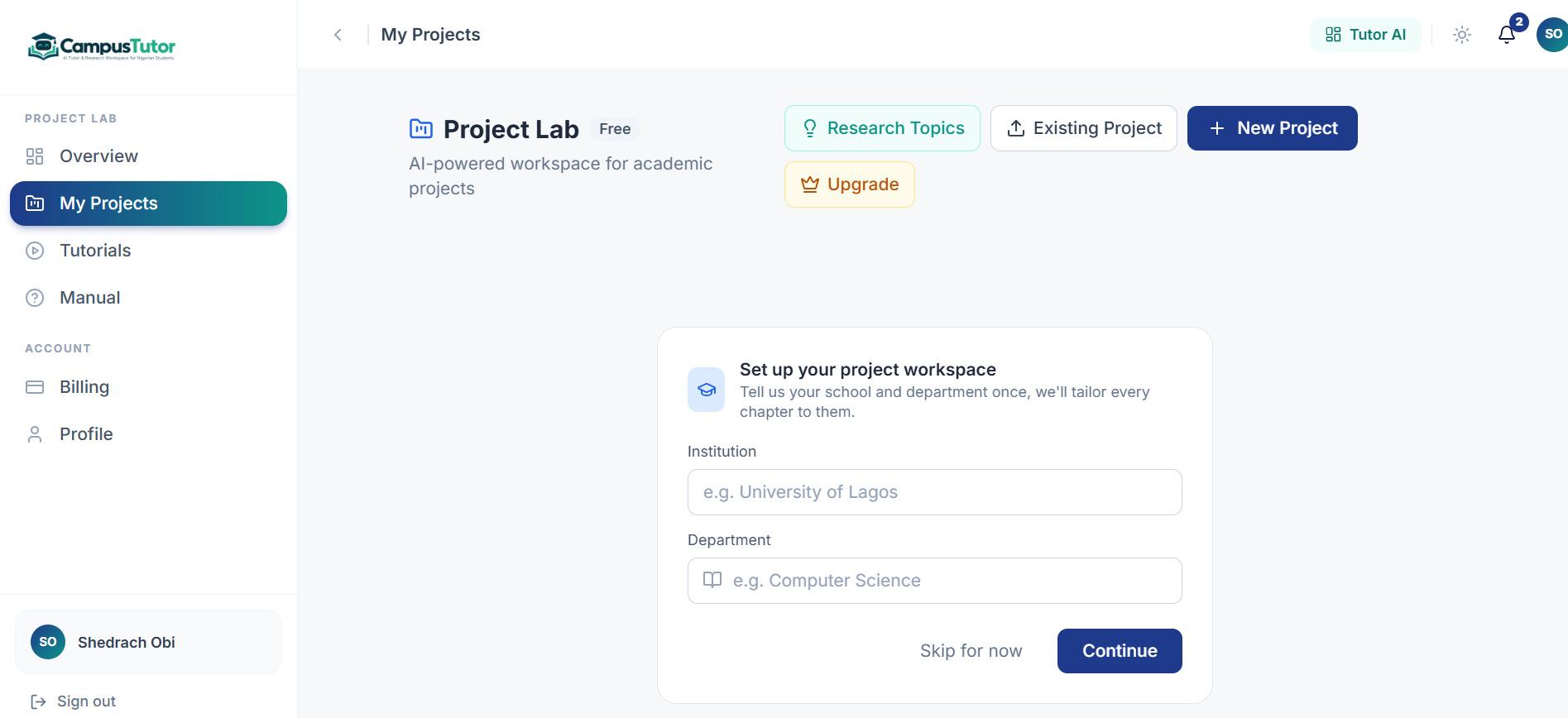
CampusTutor Project Lab on desktop, with options for research topics, an existing project or a new project, and a workspace setup form
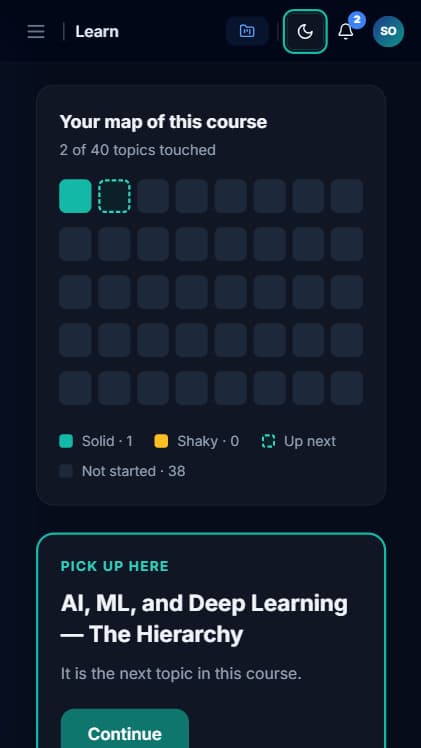
CampusTutor course map in dark mode: a grid of 40 topics marked solid, shaky, up next or not started, with a Pick up here card for the next topic

Tekora productLive

CampusTutor

Problem
Students need patient, personal help with their own courses, at any hour, often on a phone
Target users
Students at Nigerian universities, polytechnics and colleges
Product
An AI tutor and research workspace, live at campustutor.ng
Key functionality
  • A tutor that teaches from the student’s own courses
  • Study sessions planned around the time a student has
  • Course tracking with a weekly readiness score
  • A research workspace for projects and theses
Approach
Designed for short study bursts on a phone and a metered data plan, and shaped to explain rather than just answer
Outcome
Live. PageSpeed Insights: 99 for mobile performance, 100 for accessibility, best practices and SEO (29 September 2026). Usage results will be published once measured
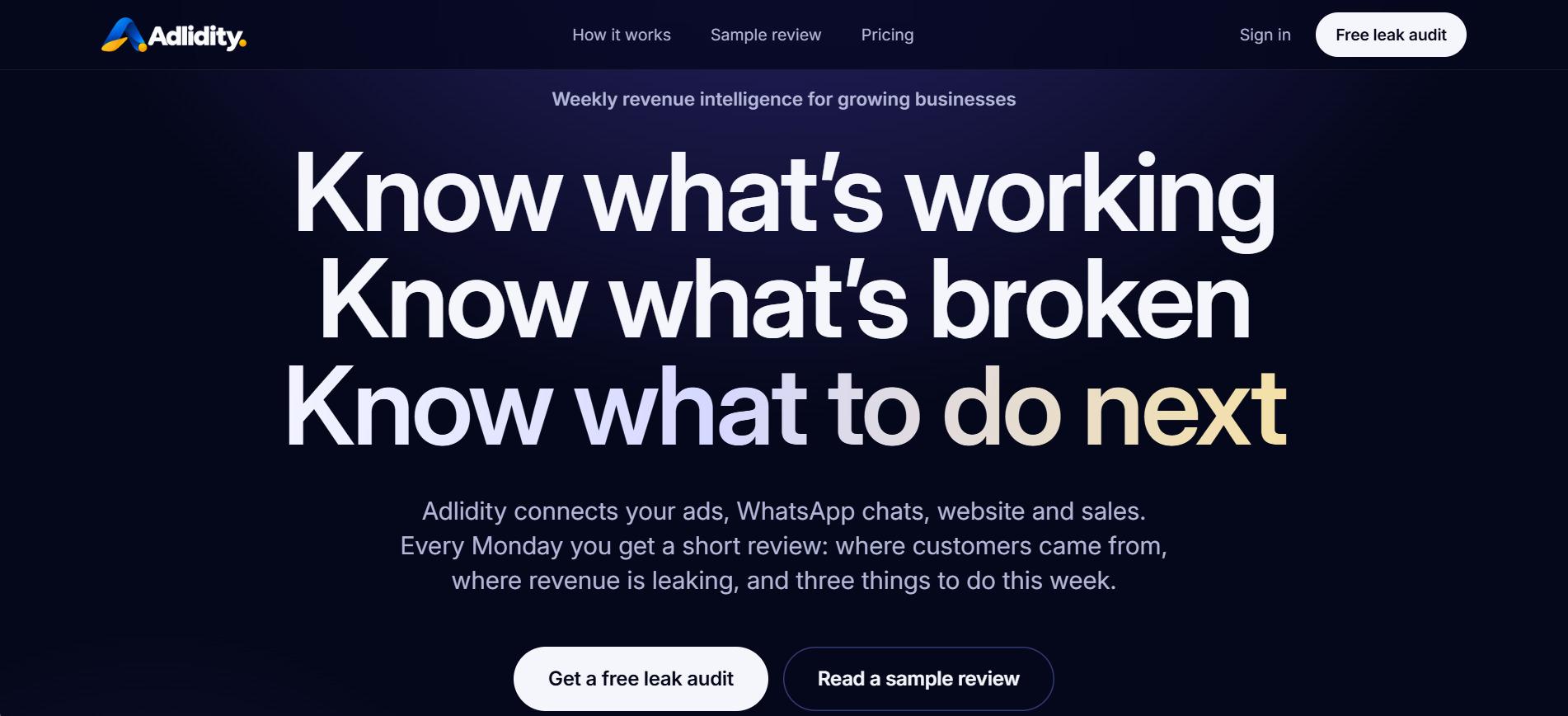
Adlidity homepage: “Know what’s working. Know what’s broken. Know what to do next”, with buttons to get a free leak audit or read a sample review
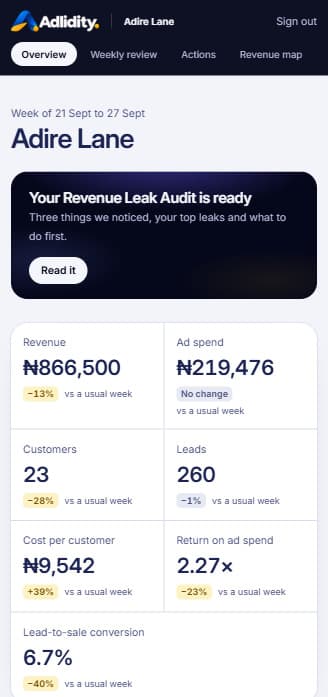
Adlidity overview on a phone, showing the week’s revenue, ad spend, customers and leads against a usual week

Tekora productIn development

Adlidity

Problem
Owners see ad spend and sales, but not where customers are lost in between
Target users
Owners of growing Nigerian businesses
Product
Weekly revenue intelligence, in development
Key functionality
  • Setup in plain language
  • A weekly review with three specific actions
  • A revenue map that shows leaks in naira
  • Figures compared with the business’s usual week
Approach
A weekly review instead of another dashboard, because busy owners act on a short report, not on charts
Outcome
In active development. No usage figures yet, so we don’t quote any

A registered Nigerian company. Tekora Services is part of Tekora Global LTD, registered with the Corporate Affairs Commission (RC 9111995). We are based in Abuja and work across Africa.

Certificate of incorporation of Tekora Global LTD, company registration number 9111995, issued by the Corporate Affairs Commission of Nigeria

Corporate Affairs Commission, Nigeria

Certificate of incorporation

Company
Tekora Global LTD
Registration number
RC 9111995
Incorporated
23 December 2025
Type
Private company limited by shares, under the Companies and Allied Matters Act 2020

Shown for verification only. Not for copying or reuse

Already have a product? We can help make it better

Not everyone starts from zero. If your product is live but struggling, or has become hard to change, we start by understanding why.

  • Product audit

    Where users struggle, and where the product falls short of its goal

  • Technical assessment

    The state of the code, architecture and hosting, in plain language

  • UX redesign

    Flows and screens rebuilt around what users actually do

  • Feature prioritisation

    What to fix, keep, add or remove first

  • Performance improvements

    Faster pages and screens, especially on phones

  • Modernisation

    An ageing product rebuilt in stages, with its data moved across

  • New functionality

    Features added on a foundation that can take them

  • Taking over a stalled project

    Picking up where another team stopped, after an honest assessment

Is your product live but not doing what it should?

Discuss my product

Ways to work with us

Start where you are. Many products move from one to the next.

  1. Product discovery

    For when
    You have an idea and need clarity before building
    You get
    A product brief, MVP scope, user journeys and a costed plan
    Start with discovery
  2. MVP development

    For when
    You want to test the core idea with real users
    You get
    A live first release, with measurement in place
    Start with an MVP
  3. Full product development

    For when
    You need strategy, design, engineering and launch in one team
    You get
    A launched product, built in reviewed increments
    Start full development
  4. Product redesign

    For when
    Your existing product needs to work better
    You get
    An audit, a redesign plan and the improved product
    Start with a redesign
  5. Product evolution

    For when
    Your product is live and needs ongoing development
    You get
    Regular releases guided by usage and feedback
    Start ongoing work

Software is what we build. The product is what users experience

Software development

Builds software to a list of requirements. Valuable when you know exactly what you need.

Digital product development

Works out what to build, then builds it, launches it and improves it.

  • Problem discovery
  • Product strategy
  • User experience
  • Design
  • Technology
  • Business goals
  • Launch
  • Measurement
  • Iteration

Where our other services fit

Product development can include several of these. If one describes your need exactly, start there.

  • Digital product developmentThis page

    A problem or idea, turned into a validated, designed, built and improving product.

  • SaaS development

    Software sold to many customers on subscription.

  • Web applications

    An interactive system people log in to and use in a browser.

  • Custom software

    A system built around one organisation’s own operations.

  • E-commerce development

    An online store for selling your products.

  • Web development

    A website that explains your business and brings in enquiries.

  • Business automation

    Predictable workflows automated across your tools.

  • AI automation

    AI for reading, sorting and writing work in your operations.

Is this the right service for you?

It suits some situations better than others.

A good fit if

  • You have a digital product idea
  • You’ve found a customer problem worth solving
  • You want to validate an opportunity before committing
  • You need an MVP
  • Your existing product needs to improve
  • You need product strategy and engineering together
  • You’re launching a digital service
  • You want a technology partner, not only a developer

Probably not if

  • You only need an informational websiteOur web development service is a better fit. See web development
  • You have a mature engineering team and only need extra codersWe work best when we own the product thinking as well as the code.
  • You want hundreds of features before testing the core ideaWe’ll push back on that, because it is how budgets disappear.

Start with a product discovery session

We can’t give an exact price for a product before we understand it. So the first step is a free conversation about your idea or product, then a proposal for discovery or for the build, with a written scope and a fixed price for each release.

Starting price₦1,500,000

₦1.5m – ₦10m+
Depending on what is already known and the scope of the first release

Most projects land inside a typical range. Your proposal gives the fixed price for your scope

Book a discovery session

What shapes the cost

  • How much is already known and validated
  • Discovery scope
  • Design and UX complexity
  • Features in the first release
  • Web, mobile or both
  • Integrations and payments
  • Backend complexity
  • AI features
  • Security requirements
  • Expected number of users
  • Timeline
  • Support after launch

How we keep a product project on track

Building a product involves uncertainty. Here is how we manage it.

Defining the product
Discovery and strategy, written down and agreed before design starts.
Choosing the MVP
Each feature is tested against one question: is it needed to prove the core idea?
Scope changes
Expected. Agreed in writing, with their effect on time and cost, before they are built.
Progress
Working software to review at the end of each increment, not status reports.
UX validation
Clickable prototypes tried by real people before development, and usage watched after launch.
Testing
Function, usability, security and performance, before every release.
Technical decisions
Explained in plain language, with the trade-offs, and made with you.
Ownership
The product, the code, the designs and the data are yours.
Intellectual property
Agreed in writing before work starts. If you’d like an NDA before sharing your idea, ask.
After launch
Support, monitoring and continued development, or a full handover to your own team.

Product development questions

Something else on your mind? Email info@tekoraservices.com or call +234 803 262 3702

What is digital product development?

Turning a problem, opportunity or idea into a digital product people use: discovering what it should be, designing the experience, building it, launching it and improving it with real usage.

How is it different from software development?

Software development builds to requirements. Product development works out the requirements first, from the user’s problem and your business goals, then builds, launches and improves the product.

Do I need a technical specification?

No. Most founders come with an idea or a problem, not a specification. Writing it with you is part of discovery.

I only have an idea. Can you help?

Yes. That is where product discovery starts. We help you define the user, the problem and what the first version should do, before you spend on building.

Can you help validate my idea?

We can help you test the riskiest assumptions, through conversations with likely users, prototypes and an MVP. Validation reduces risk; it can’t guarantee success.

Can you define the MVP?

Yes. We work out with you the smallest useful product that tests your core idea, and agree in writing what it includes and what waits.

Can you design the product?

Yes. User flows, wireframes, clickable prototypes and the final interface, designed for phones first.

Can you build web and mobile products?

Yes. Many products start on the web, which reaches every user without an app store, and add a mobile app when the product needs it. We’ll recommend what suits yours.

Can you build SaaS products?

Yes. Subscription products with accounts, billing and admin tools are a core part of what we build.

Can you build AI-powered products?

Yes, where AI does something genuinely useful for the user. CampusTutor, our own AI tutor, is an example.

Can you integrate Paystack?

Yes, for one-off payments and subscriptions, with every payment confirmed with Paystack before the product treats it as paid.

Can you integrate Flutterwave?

Yes, in the same way, including for payments in currencies other than naira.

Can you build for African users?

Yes. We design for mid-range phones, mobile data, local payments and WhatsApp-first customers from the start.

Can you redesign an existing product?

Yes. We start with an audit of how people use it and where they struggle, then redesign the parts that matter most.

Can you rescue a stalled project?

Often, yes. We first assess the code and the product honestly, then recommend whether to continue, repair or rebuild parts of it.

How much does digital product development cost?

Digital product development starts from ₦1,500,000. The final price depends on what is already known, the scope of the first release, the platforms and the integrations. After a free first conversation, we propose discovery or a build with a written scope and a fixed price for each release.

How long does it take?

Discovery usually takes two to four weeks. A first release typically follows in eight to sixteen weeks, depending on what discovery reveals.

Who owns the final product?

You do. The product, the code, the designs and the data are yours.

Do you provide post-launch support?

Yes. Monitoring, fixes and continued development as the product grows, or a full handover to your team with documentation.
Have an idea worth building?

Let’s work out what the right product looks like. You don’t need a specification, just the problem you want to solve. We’ll reply within 24 hours, and the first conversation is free.

Rather write it down first? Email us your idea in a few sentences