SaaS product development for founders and businesses

Build the SaaS product your customers pay for

We help you decide what to build, then design, engineer and launch it, so you get a working SaaS product without assembling and managing a technical team yourself.

  • We build and run SaaS products of our own
  • You own the code
  • Reply within two working days
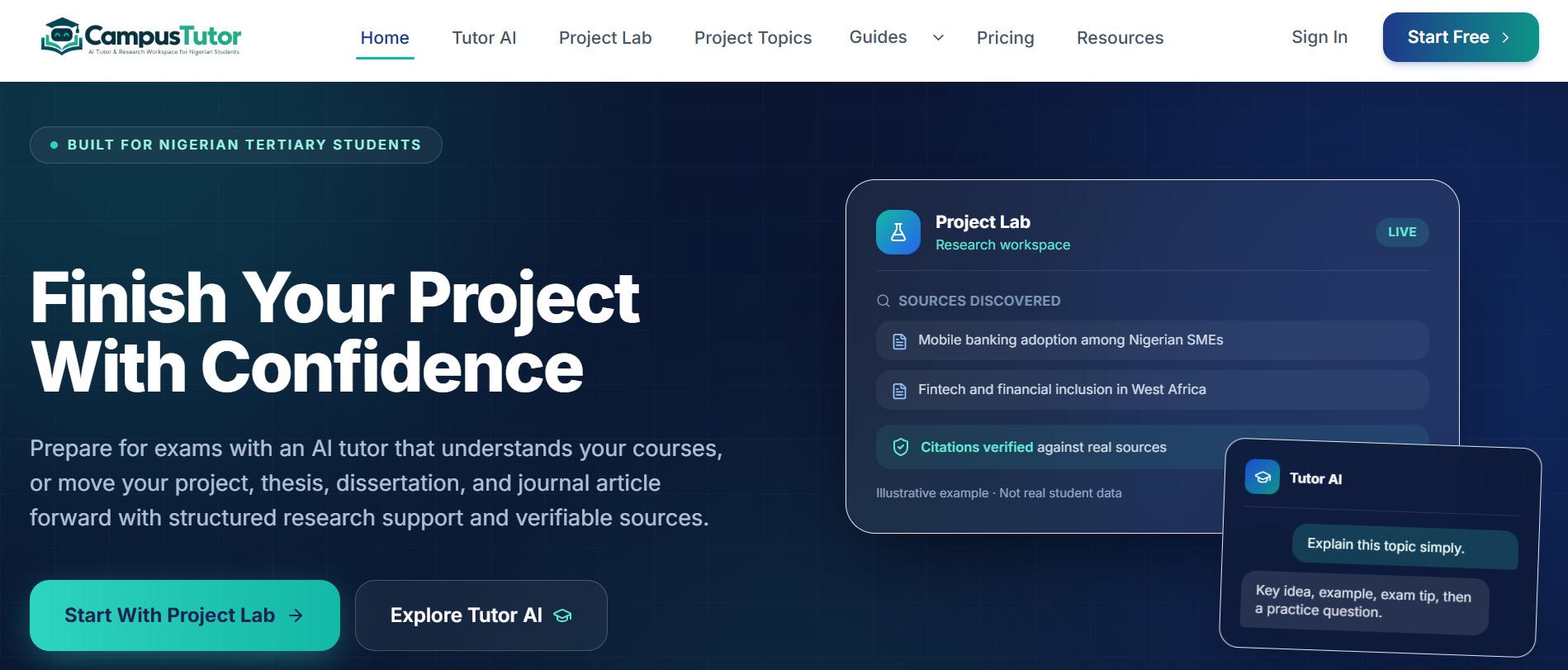
CampusTutor homepage: “Finish your project with confidence”, beside a Project Lab card showing sources discovered and citations verified, and a Tutor AI chat
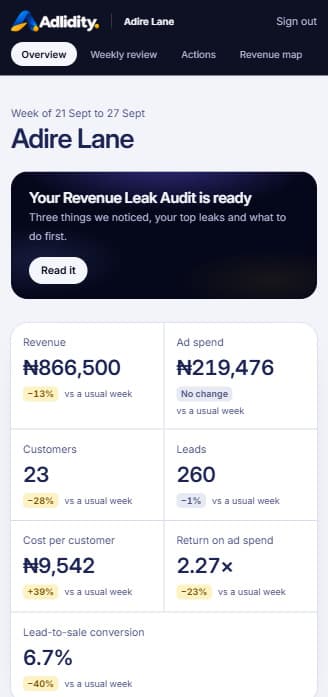
Adlidity overview on a phone, showing the week’s revenue, ad spend, customers and leads against a usual week
Our own SaaS products: CampusTutor, live, and Adlidity, in development

Building software is easy to underestimate

Most software projects that struggle don’t fail on code. They fail on decisions made before and around it.

  • Building too much, too soon

    Months go into features nobody asked for, while the one thing users needed waits.

  • Building before validating

    The product launches, and only then does anyone learn whether people will use it or pay for it.

  • Requirements that keep moving

    Without an agreed scope, every conversation adds work and every week pushes the launch back.

  • An experience people abandon

    Confusing sign-up, cluttered screens and unclear next steps lose users who were ready to pay.

  • Architecture that can’t grow

    Shortcuts that worked for ten users break at a thousand, and fixing them means rebuilding.

  • No plan beyond launch

    No monitoring, no analytics, no way to know what is working or what just went wrong.

Don’t just build software. Build the right software

We don’t start with code

We start with the questions that decide whether a product succeeds. The answers shape everything we build.

  1. What problem are we solving?

    In one sentence, and for whom. If it can’t be said simply, it isn’t ready to build.

  2. Who is the user?

    What they do today, what frustrates them, and what would make them switch.

  3. What must the product actually do?

    The few jobs it has to do brilliantly, separated from everything that would be nice.

  4. What should be built first?

    The smallest release that proves the idea and starts earning trust or revenue.

  5. What can wait?

    Features that stay on the roadmap until real users show they matter.

  6. How should the system evolve?

    An architecture that suits this stage and can grow into the next without a rewrite.

What we build

Products for founders launching something new, and for businesses turning what they know into software.

  • SaaS products

    Subscription software that businesses or consumers sign up for, pay for and use every day.

    • Multi-tenant platforms
    • B2B and B2C SaaS
    • Vertical SaaS for one industry
    • Subscription software
  • Business software

    Software that runs a business, or turns an internal process into a product other companies can buy.

    • Management systems
    • Operational platforms
    • Customer portals
    • Dashboards
  • Marketplaces and platforms

    Products that connect two sides, with listings, bookings, payments and trust built in.

    • Two-sided marketplaces
    • Booking platforms
    • Service marketplaces
  • AI-powered products

    Products where AI does real work for the user, like the tutor at the heart of CampusTutor.

    • AI assistants and copilots
    • Document and data tools
    • AI-powered workflows
  • Complex web applications

    Applications with many roles, rules and data, that work in any browser with no app store in the way.

    • Client and member portals
    • Data platforms
    • Business applications

An MVP is not a cheap version of your product

It is the smallest version that can test your most important assumptions with real users. Built well, it becomes the foundation of the full product rather than something you throw away.

An MVP is not

  • Every feature, done badly
  • A demo that can’t handle real users
  • Code you will have to rewrite to grow

An MVP is

  • The core job, done properly
  • Real sign-up, real data and, where it matters, real payments
  • A foundation the next release builds on

We help you decide

  1. What belongs in version one
  2. What should wait for evidence
  3. Which assumption to test first
  4. Which integrations are essential at launch
  5. What architecture suits this stage

Most MVPs we would recommend fit in ten to sixteen weeks. If yours doesn’t, that is usually a sign the scope should be cut, and we will help you cut it.

Plan your MVP with us

Two ways to build the same idea

The difference is rarely the quality of the code. It is the order in which decisions are made.

Building without a process

  1. Idea
  2. Requirements scattered across chats and calls
  3. Scope nobody wrote down
  4. A developer starts coding
  5. Features keep changing
  6. The budget grows
  7. Launch slips, again

Building with Tekora

  1. Idea
  2. Product discovery
  3. A clear, agreed scope
  4. UX and architecture designed
  5. The MVP is built
  6. Tested on real devices
  7. Launch
  8. Improve with real usage

From idea to product

Six stages, each ending in something you can see, test and approve. You always know what is being built and why.

  1. Discover

    Your business, market, users and problem

    Conversations with you and, where possible, your future customers, before anything is proposed.

    You get A problem brief

  2. Define

    Scope, priorities and requirements

    What the first release includes, what waits, and how we will know it worked.

    You get Written scope and release plan

  3. Design

    Experience, interface and architecture

    Clickable designs tested with real people, and the technical plan behind them.

    You get Prototype and architecture

  4. Build

    Engineered in short cycles

    Working software to review every week or two, tested and documented as it grows.

    You get Working software

  5. Launch

    Tested, deployed and monitored

    Functionality, security, performance and usability checked, then released with monitoring in place.

    You get Live product

  6. Evolve

    Improve with real usage

    Analytics and feedback decide the next release, not guesswork.

    You get A roadmap backed by evidence

Everything a SaaS product needs

A SaaS product is more than screens. These are the parts that make it work as a business, grouped by what they do for you.

  • Product and design

    Users understand it, sign up and come back

    • Product discovery and requirements
    • UX and UI design
    • Onboarding that gets users to value quickly
    • Design system
  • Accounts and access

    Every customer’s data is separate and secure

    • Multi-tenancy
    • Sign-up, login and password recovery
    • Teams, roles and permissions
    • Account management
  • Revenue

    Customers can subscribe, upgrade and pay without friction

    • Subscription plans and billing
    • Upgrades, downgrades and trials
    • Paystack, Flutterwave and international payments
    • Naira and dollar pricing
  • Platform

    The product connects to everything around it

    • APIs and webhooks
    • Third-party integrations
    • Email, in-app and WhatsApp notifications
    • File storage and search
  • Operations and insight

    You can run the business without touching the database

    • Admin dashboards
    • Product and business analytics
    • Customer support tools
    • Audit trails
  • Launch and reliability

    It stays fast, secure and available as you grow

    • Automated testing
    • Security foundations
    • Deployment pipelines
    • Monitoring and alerts

AI that solves a real product problem

AI belongs in a product when it removes work for the user, not because it is trending. We start with the problem and only then choose the model.

  • Assistants that answer from your own data
  • Document analysis and data extraction
  • Search that understands meaning
  • Recommendations
  • Summaries and drafted content
  • Classification and routing
  • Support that resolves routine questions
  • Workflows that act on what they read
  • Problem first

    Every AI feature starts with a user problem and a way to measure whether it helps.

  • Checked, not trusted blindly

    Outputs are evaluated, grounded in real sources where accuracy matters, and reviewed by people where mistakes are costly.

  • Costs that scale sensibly

    Model usage is designed so each new customer adds revenue faster than it adds AI cost.

CampusTutor, our own product, runs AI in production: it teaches from each student’s courses and checks research sources against real references. See CampusTutor

Built for the African market

Building for African users sometimes calls for different product decisions. We make them from the start, not after launch.

  • Phone first, light on data

    Many users arrive on mid-range Android phones and metered data, so every screen is designed and budgeted for them.

  • Ready for patchy connections

    Work saves as it goes and actions retry safely, so a dropped connection doesn’t cost the user their progress.

  • Local and international payments

    Paystack, Flutterwave, cards and transfers for local customers, with international payments when you sell abroad.

  • Prices in local currencies

    Naira and dollar pricing, and plans designed for what your market can pay.

  • Where your users already are

    WhatsApp, SMS and email notifications, so important messages are seen.

  • Infrastructure sized to your stage

    Hosting that costs little while you are small and grows with you, without paying today for scale you don’t have.

Products we have built and run

We build SaaS for clients and for ourselves, so our advice comes from operating products, not only shipping them. We publish usage and revenue figures only when they are real.

CampusTutor homepage: “Finish your project with confidence”, beside a Project Lab card showing sources discovered and citations verified, and a Tutor AI chat
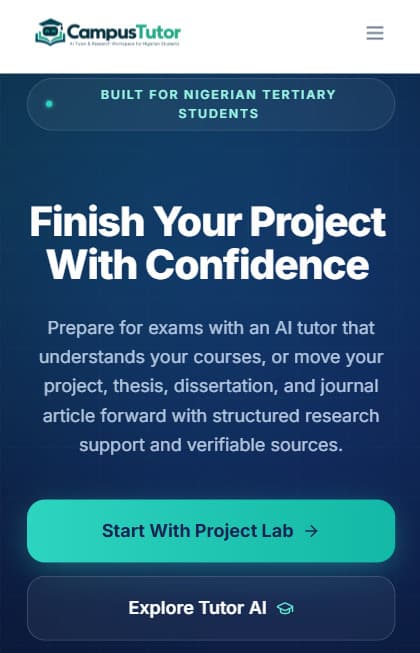
CampusTutor homepage on a phone: “Finish your project with confidence”, with Start With Project Lab and Explore Tutor AI buttons

Tekora productLive

CampusTutor

An AI study partner for students who can’t wait for office hours

The problem
Students need help that is patient, available at any hour and grounded in what they are actually studying, without assuming a laptop, a fast connection or money for private lessons.
Key functionality
  • Tutor AI, which explains a student’s own courses step by step: key idea, example, exam tip, then a practice question
  • Tutor Mode, which plans each sitting around the time a student has: check, teach, practise, check again, recap
  • Course tracking with a weekly study readiness score and a suggested focus session for each day
Technology
Next.js, React, Tailwind CSS, NestJS, Python, Docker, Cloudflare, Cloudflare R2, Progressive Web App
Where it is now
Google PageSpeed Insights scored campustutor.ng 99 for performance on mobile and 100 on desktop, with 100 for accessibility, best practices and SEO on both, on 29 September 2026. CampusTutor is Tekora’s own product, built and operated in-house. We will publish usage and learning outcomes here once they are measured, not before.
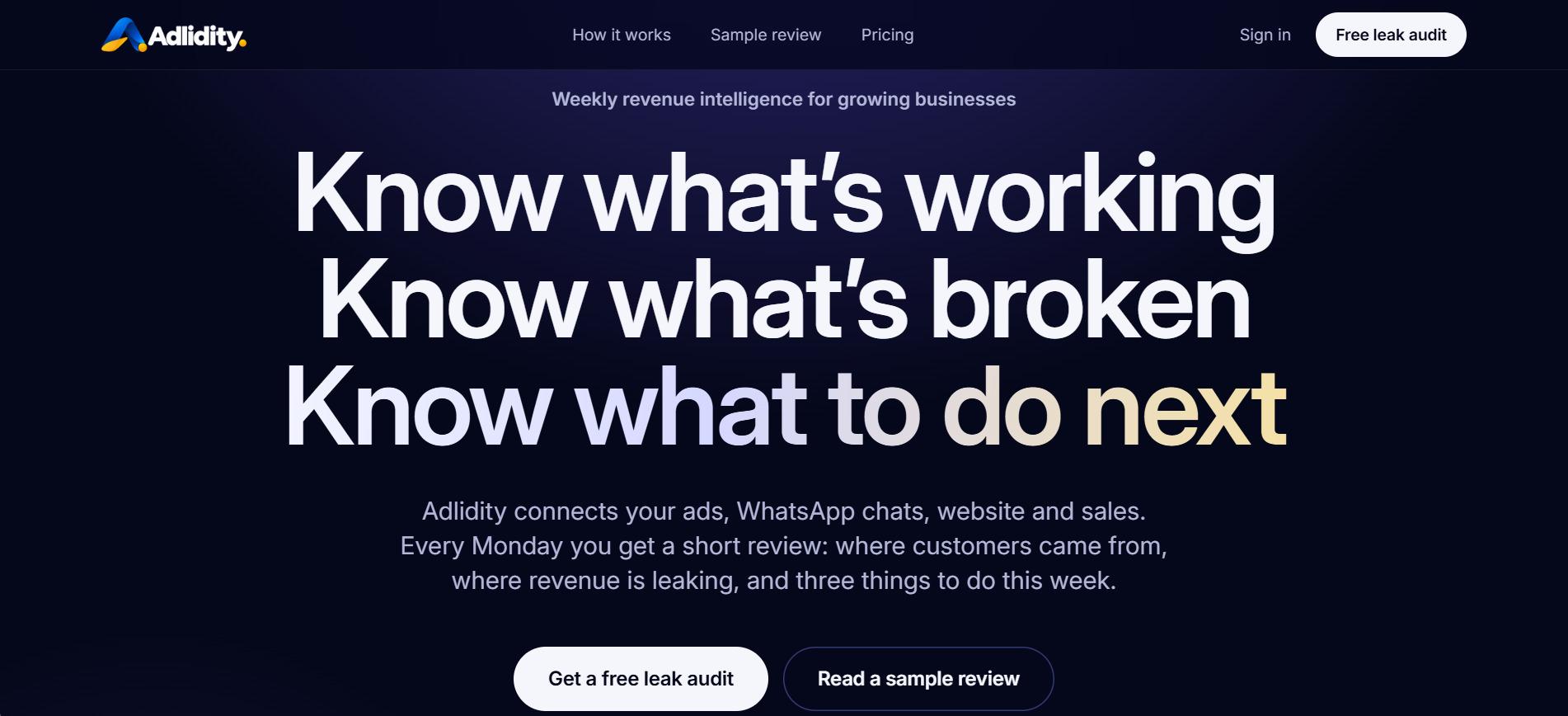
Adlidity homepage: “Know what’s working. Know what’s broken. Know what to do next”, with buttons to get a free leak audit or read a sample review
Adlidity overview on a phone, showing the week’s revenue, ad spend, customers and leads against a usual week

Tekora productIn development

Adlidity

Weekly revenue intelligence for growing businesses

The problem
Owners can see what they spend on ads and what they sell, but not what happens in between: leads that never got a reply, buyers who went quiet, channels that cost more than they return. Revenue leaks without anyone noticing.
Key functionality
  • Setup in plain language: how the business finds customers and how they buy, then connecting its data. The first release covers Meta ads, with sales closed on WhatsApp or a website
  • A Weekly Growth Review every Monday: what happened, where customers are being lost, why Adlidity thinks so, and three specific actions
  • A revenue map that follows each source from first contact to payment and shows where money leaked
Technology
Next.js, React, TypeScript, Node.js, Tailwind CSS, Docker, pnpm
Where it is now
Adlidity is in active development. If you want to see where your revenue comes from and where it leaks, tell us about your business.

Want a product built with the same care?

Discuss your SaaS idea

Technical foundations you won’t outgrow

Technology choices are business decisions. We choose proven tools so your product is fast, secure and easy for any future team to work on.

  • Performance

    Fast pages and responses keep users engaged, especially on mobile networks.

  • Security

    Authentication, access control and encrypted connections designed in from the start.

  • Maintainability

    Clear structure, typed code and documentation, so changes stay quick and safe.

  • Scalability

    Architecture that handles more customers and data without a rewrite.

  • Reliability

    Automated tests, monitoring and reversible releases keep the product available.

  • Integration

    APIs and webhooks that let your product connect to the tools your customers use.

Interface
  • Next.js
  • React
  • TypeScript
Backend
  • Node.js
  • NestJS
  • Python
Data
  • PostgreSQL
  • Redis
Infrastructure
  • Docker
  • Cloudflare
  • CI/CD
  • Monitoring
Integration
  • REST APIs
  • Webhooks
  • AI model APIs

Ways to work with us

Choose the engagement that fits where your product is today.

  • You have an idea and want to test it properly

    MVP development

    Discovery, a focused first release and a launch that tells you what to build next.

  • You know what you need and want it built well

    Product build

    Design and engineering of a complete product, delivered in planned releases.

  • Your product is fragile, slow or hard to change

    Product rescue and rebuild

    An honest review of what to keep, then a planned path to fix or rebuild the rest.

  • You want a long-term product team

    Product partnership

    Ongoing design and engineering, with a roadmap reviewed together.

  • You have a team and need more capacity

    Engineering support

    Designers and engineers who work alongside your team, or fill a specific gap.

What will it cost?

SaaS products vary widely, so the figures here are a starting point. We give you a written scope and a price for each release before any work starts, and help you trim the scope if the first version costs more than it should.

Starting price₦2,500,000

₦2.5m – ₦5m
MVP
₦5m – ₦10m
Growth-stage product
₦10m+
Complex SaaS

Most projects land inside a typical range. Your proposal gives the fixed price for your scope

Get a product assessment

What affects the price

  • Scope of the first release
  • Number of user types, roles and journeys
  • Billing, payment and integration needs
  • AI features and how much checking they need
  • Security and compliance requirements
  • Design complexity and timeline

How we keep your project on track

Building software is a significant investment. Here is how we protect it.

Requirements
Agreed in a written scope before building starts, with what each release must do to be accepted.
Changes
Change is normal. Each change is estimated for time and cost, and only goes ahead once you approve it.
Progress
Working software to review every week or two, and a written update so you always know what is done and what is next.
Testing
Automated tests on the logic your business depends on, and a test version of the product where you try every release before it goes live.
Deployment
Automated releases that can be rolled back, so going live is routine rather than risky.
Ownership
You own the source code and the product. The code lives in a repository you can access from day one.
Security
Authentication, access control, encrypted connections and careful handling of personal data under the Nigeria Data Protection Act.
After launch
We watch the launch closely and fix what real usage reveals. Ongoing support is optional, and documentation means you are never locked in.

Tekora Services is part of Tekora Global LTD, registered with the Corporate Affairs Commission (RC 9111995), and based in Abuja.

Certificate of incorporation of Tekora Global LTD, company registration number 9111995, issued by the Corporate Affairs Commission of Nigeria

Corporate Affairs Commission, Nigeria

Certificate of incorporation

Company
Tekora Global LTD
Registration number
RC 9111995
Incorporated
23 December 2025
Type
Private company limited by shares, under the Companies and Allied Matters Act 2020

Shown for verification only. Not for copying or reuse

Is Tekora the right partner for you?

We do our best work with a particular kind of client. Here is how to tell.

A good fit if

  • You have a clear business problem, and people who have it
  • You want to build software around that problem
  • You will invest in discovery, design and engineering, not just code
  • You want a long-term technology partner
  • You expect to improve the product after launch

Not every idea needs to be SaaS

  • Only your own team will use itAn internal tool or automation may cost far less than a SaaS product. See business automation
  • The problem isn’t clear yetStart with discovery before committing to a build. We can help with that.
  • You need the cheapest possible buildWe are probably not the right partner, and we would rather say so now.

Questions founders ask us

Something else on your mind? Email info@tekoraservices.com or call +234 803 262 3702

I have an idea but no technical specification. Can you help?

Yes, that is where most of our projects start. Discovery turns your idea into a written scope, user journeys and a release plan, in plain language. You don’t need to know anything technical.

How much does SaaS development cost?

SaaS development starts from ₦2,500,000, and most MVPs fall between ₦2.5m and ₦5m. The final price depends on the scope of the first release, the number of user types, billing and integrations, and any AI features. After discovery you get a written scope and a price for each release before any build starts.

How long does an MVP take?

Most MVPs we would recommend fit in ten to sixteen weeks. If yours doesn’t, that is usually a sign the scope should be cut, and we will help you cut it.

Can you help define the MVP?

Yes. Deciding what belongs in version one, what waits and which assumption to test first is often the most valuable part of our work.

Can you design the UI and UX?

Yes. We design the whole experience, from sign-up and onboarding to everyday screens, and test it with real people before engineering starts.

Can you integrate Paystack or Flutterwave?

Yes, for one-off payments and subscriptions, with automatic confirmation when a payment succeeds. We add international payment providers when you sell abroad.

Can you build subscription billing?

Yes: plans, trials, upgrades, downgrades, renewals, failed payment handling and invoices, in naira, dollars or both.

Can you add AI features?

Yes, when they solve a real problem for your users. We run AI in production in our own product, CampusTutor, and design for accuracy, privacy and cost from the start.

Can you work with an existing product?

Yes. We can add features, improve the experience or take over development. We start by reviewing the code and architecture so we know what we are building on.

Can you fix or rebuild an existing SaaS product?

Yes. We tell you honestly what is worth keeping and what isn’t, then fix or rebuild in planned steps so your customers aren’t disrupted.

Will I own the source code?

Yes. You own the source code and the product, and the code lives in a repository you can access from day one, with documentation so any future team can work on it.

Do you provide maintenance?

Yes. Ongoing support is optional and covers monitoring, fixes, security updates and new features as you grow.

Can you scale the product after launch?

Yes. We design for the next stage of growth, not an imaginary one, so the architecture can grow with your customers without a rewrite.

Do you work with international clients?

Yes. We are based in Abuja and work with founders and companies across Africa and beyond, remotely. We can quote in naira or dollars.
Have a SaaS idea? Let’s turn it into something real

Tell us about the problem and the people who have it. The first consultation is free, and we reply to every serious enquiry within two working days.

Not ready to share details? Email us the problem your product would solve, in one sentence